
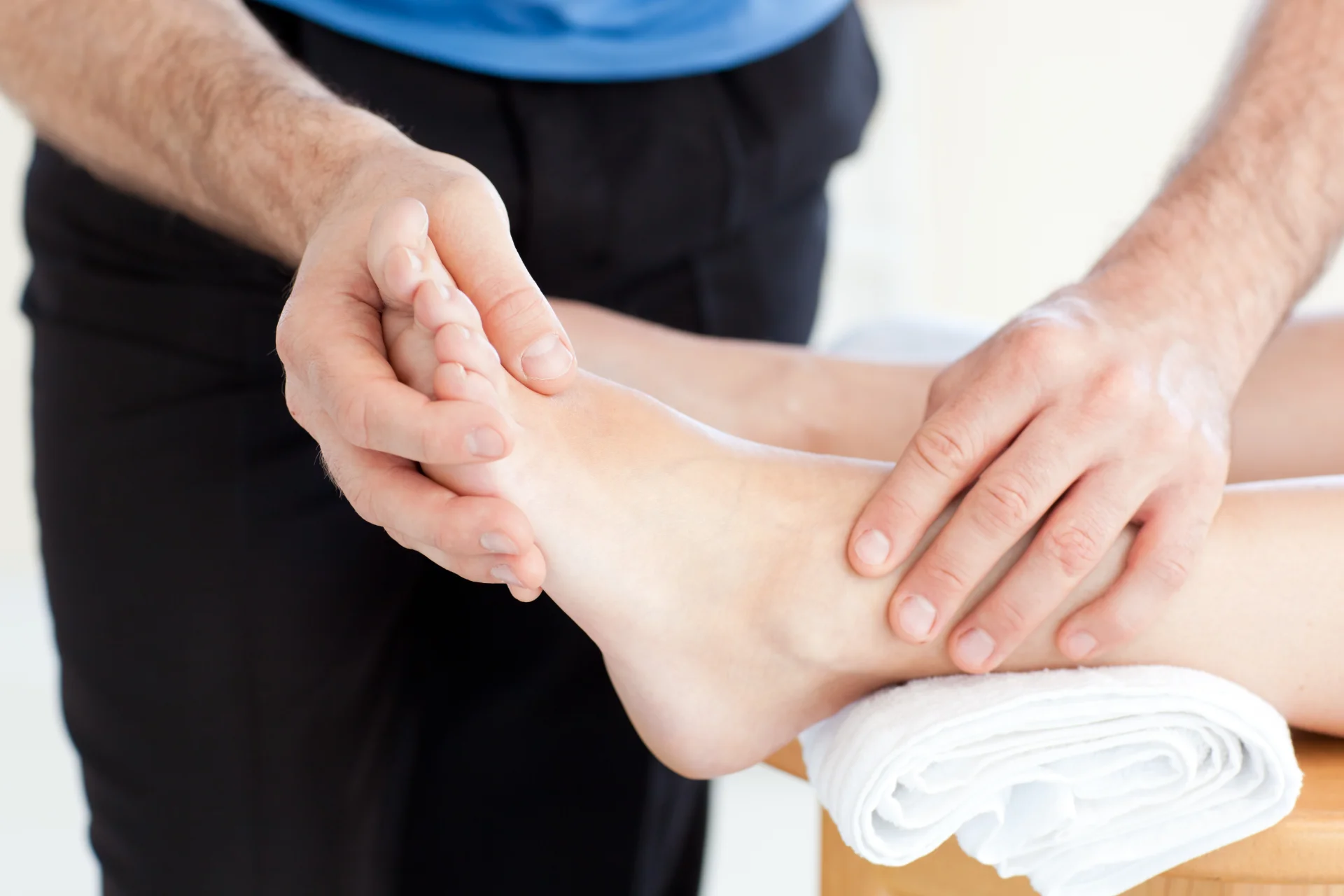
Effective Treatment for Plantar Fasciitis
Get Rid of Heel Pain for Good
Plantar fasciitis is the most common cause of heel pain, and it can make every step feel like a challenge. It typically causes a sharp, stabbing sensation under the heel—at its worst during those first few steps in the morning or after sitting for a while. Whether it’s affecting your morning walk or making your workday miserable, we understand how debilitating it can be.
At The Whiteley Physiotherapy Centre, we treat plantar fasciitis regularly and successfully. We move beyond “quick fixes” by combining evidence-based physiotherapy with specialist access to Shockwave Therapy and Podiatry, giving you the best possible chance of a full recovery under one roof.
Understanding Plantar Fasciitis
What is the Plantar Fascia?
The plantar fascia is a thick, supportive band of tissue that runs along the sole of your foot, connecting your heel bone to your toes. It acts like a shock-absorbing bowstring, supporting the arch of your foot every time you take a step.
Why Does it Become Painful?
Like Achilles tendinopathy, we now understand this condition as a degenerative overload rather than a simple “itis” (inflammation). When the tissue is subjected to more stress than it can handle, it begins to thicken and become painful. Because it isn’t a traditional inflammatory problem, rest alone rarely resolves it; the tissue actually needs structured “loading” to recover its strength and elasticity.
Common Triggers
- Sudden Activity Spikes: A rapid increase in walking, running, or time spent standing.
- Biomechanics: Tight calf muscles, weak foot arches, or very high/low arches.
- Footwear & Surface: Moving to unsupportive flat shoes or spending long hours on hard floors.
- Weight & Load: Increased body weight or carrying heavy loads can place extra strain on the fascia.
How We Treat Heel Pain
- Progressive Loading: Research shows that specific, high-load strengthening exercises for the foot and calf are the most effective way to “re-model” the fascia and reduce pain over the long term.
- Focused Shockwave Therapy: For persistent cases that haven’t settled after three months, Shockwave Therapy is one of the most clinically evidenced treatments available. It stimulates a new healing response in the chronic tissue and is available right here in our Whiteley clinic.
- Biomechanical Podiatry: If your foot structure is a primary driver of your pain, our on-site Podiatry service can provide a specialist assessment and, where necessary, custom orthotics to offload the painful area.
- Manual Therapy & Taping: We use soft tissue techniques on the calves and specific taping methods to provide immediate, short-term relief, helping you stay mobile while your rehabilitation takes effect.
Your First Appointment
At The Whiteley Physiotherapy Centre, we believe that solving heel pain requires a look at the “whole leg,” not just the foot. Your first session is about identifying your specific triggers and building a roadmap to recovery.
Practicalities for your visit:
- A Comprehensive 45-Minute Assessment: Your clinician will assess your heel sensitivity, foot mechanics, calf strength, and ankle mobility to confirm the diagnosis.
- What to wear: Please wear shorts or trousers that can be easily rolled up to the knee.
- What to bring: It is essential to bring the shoes you wear most often (both for work and exercise) so we can assess their support and wear patterns.
- Immediate Insight: You will leave with a clear diagnosis, an explanation of why your heel is painful, and your first set of therapeutic exercises.
Honesty in Recovery
We believe in realistic expectations. Because the plantar fascia is a dense, weight-bearing tissue, it takes time to adapt and strengthen.
Clinical Note: While taping and manual therapy can provide “relief” in the first week, a true physiological change in the tissue usually takes eight to twelve weeks of consistent exercise.
We will be honest about your timeline from the start. Our goal is not just to get you through the next week, but to ensure that your heel pain is gone for good—allowing you to walk, run, and stand with total confidence again.
Your Treatment Team
- Yves De Vos – Physiotherapist and shockwave therapy (CSP: 54623 | HCPC: PH48182)
- Cameron Hawley – Sports therapist and shockwave therapy (SST: 22983)
- Felicia Fetcu – Physiotherapist (CSP: 106027 | HCPC: PH117618)
- Bethany Vance – Physiotherapist (CSP: 127691 | HCPC: PH146896)
- Kirsty – Podiatrist
Pricing and Appointment
-
Initial Assessment £79 / 45 minutes
-
Follow-Up Session £59 / 30 minutes
-
Block Booking £319 for 6 sessions
We are recognised by Bupa, AXA PPP, Aviva, WPA, Cigna, and Vitality.
To book, call 01489 569888 or email info@thewhiteleyphysiocentre.co.uk.
Conveniently Located in Whiteley
Our clinic is at Gull Coppice, Yew Tree Drive, Whiteley, Fareham, Hampshire, PO15 7LS. We serve patients from Whiteley, Fareham, Segensworth, Swanwick, Titchfield, Sarisbury, and Burridge.
Phone: 01489 569888
Email: info@thewhiteleyphysiocentre.co.uk
Frequently Asked Questions
How long does plantar fasciitis take to recover?
With consistent rehabilitation, most patients see significant improvement within six to twelve weeks. Some stubborn cases take longer. Shockwave therapy can accelerate recovery in persistent cases.
Will it go away on its own?
Some mild cases resolve with time, but many do not, and without proper treatment, plantar fasciitis can become a chronic problem. Early treatment leads to faster recovery.
Should I rest completely?
No. Complete rest is rarely helpful. The plantar fascia needs structured loading to recover. You may need to modify your activity levels, but your clinician will keep you as active as possible.
Are orthotics helpful?
They can be, particularly if your foot biomechanics are contributing to the problem. Our podiatrist can assess whether orthotics are appropriate for you.
Is shockwave therapy effective for plantar fasciitis?
Yes. Shockwave therapy is one of the most well-evidenced treatments for persistent plantar fasciitis. It is typically recommended for cases that have not responded to three months of exercise-based rehabilitation.
Can I still exercise?
In most cases, yes, with modifications. Activities that do not aggravate your symptoms, such as cycling or swimming, are often suitable alternatives to running or walking during recovery.
What shoes should I wear?
Supportive footwear with good cushioning is generally recommended. Avoid flat shoes, flip-flops, and walking barefoot on hard surfaces. Your clinician can provide specific footwear advice.
Do I need an injection?
Steroid injections are sometimes considered for severe cases but are not usually a first-line treatment. Research suggests that injections provide short-term relief but do not address the underlying cause. Your clinician will discuss all options with you.
Is treatment covered by insurance?
Yes. We are recognised by Bupa, AXA PPP, Aviva, WPA, Cigna, and Vitality.
How do I book?
Ready to Get Started?
Fed up with heel pain? Call 01489 569888 to book your assessment and start treatment.